How Orbits are Computed
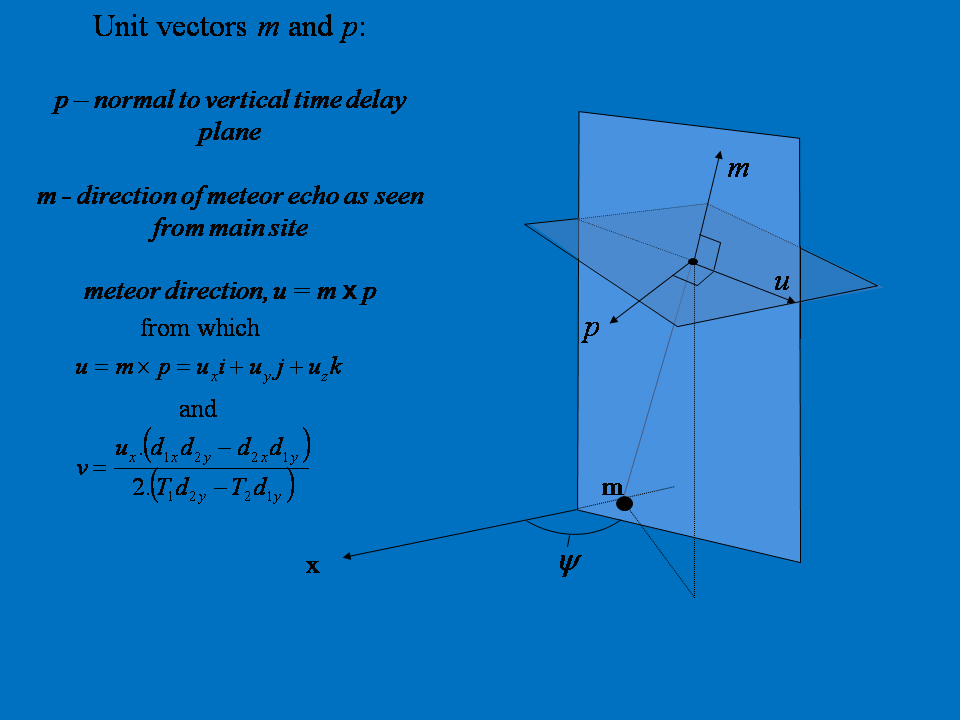
Computation of individual meteoroid orbits by specular scattering radars such as CMOR requires echo signals to be detected at a total of three or more sites. Using the interferometry information from the main site, the local apparent radiant of a particular echo can be constrained to lie on a great circle, the plane normal being given by the echo direction. By combining this information with the known station locations and apparent time of appearance of a common meteor at each site it is possible to compute the complete velocity vector of a meteoroid, assuming no deceleration. More details of the technique can be found here.
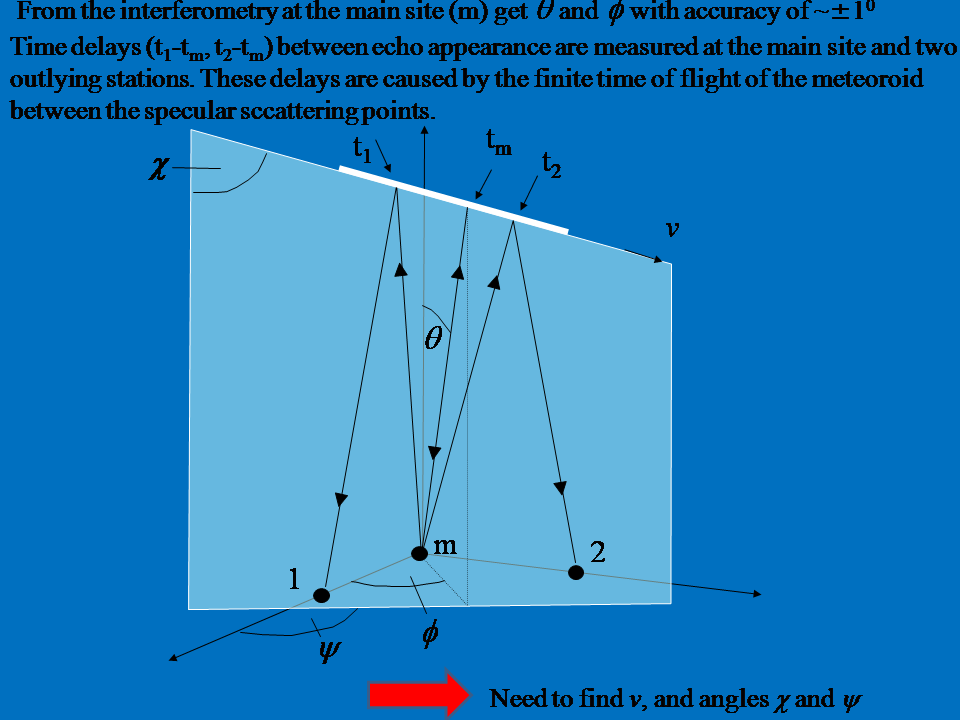
The scattering geometry, as seen from the side, is shown below:
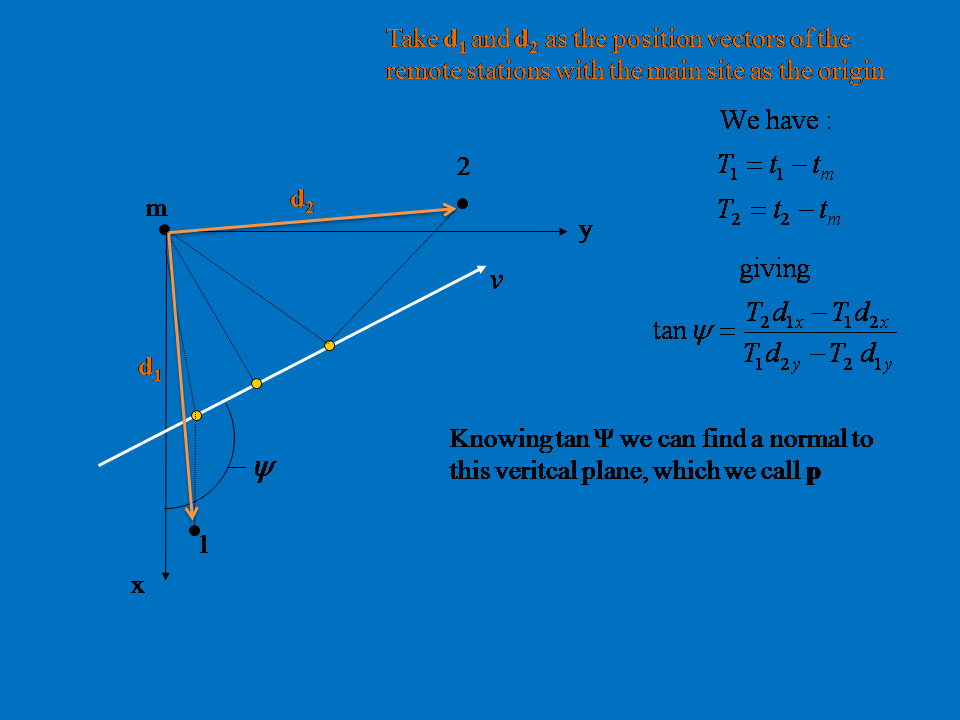
As seen from above, the scattering from the main site to each remote site relative to the meteor trail is further developed as:
Finally, with the geomtery from the time delays, station spacing and interferometry known, the meteor radiant and speed can be computed as: