
Low-Earth orbit is filling up with mega-constellations of satellites and debris. Keeping track of all of it — for collision avoidance, for cleaning satellite trails out of astronomical images, and for assessing spacecraft health — needs frequent, wide-field optical coverage. It turns out meteor cameras are ideal for the job.
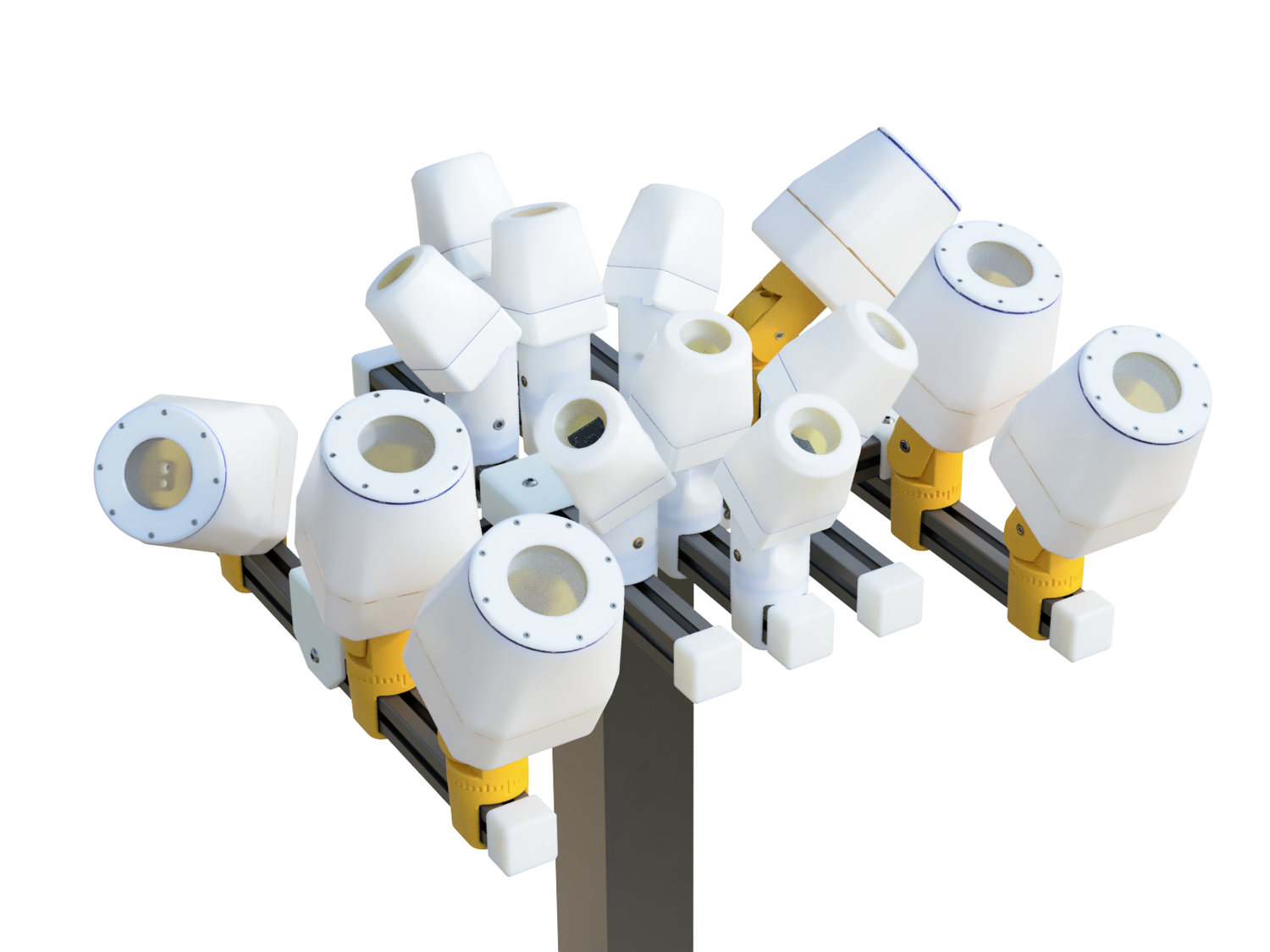
Project Luciole, run jointly with Defence R&D Canada, repurposes software and video cameras built for faint-meteor work as part of the Global Meteor Network. The prototype uses 14 cameras in a fly’s-eye configuration to cover the entire sky above 30° elevation from a single site, reaching optical magnitude +8 on LEO objects at 25 Hz — while still collecting meteor data.
Why this design
- Uncued tracking: the system finds and follows objects with no prior orbit, picking up uncatalogued debris.
- Wide fields are well matched to Canada’s often partly cloudy skies — tracking continues in clear gaps.
- Light curves of satellites give clues to their state of health and stability.
- Built on existing meteor-camera hardware, so the same station serves both science and space-surveillance.
Work on this as a student
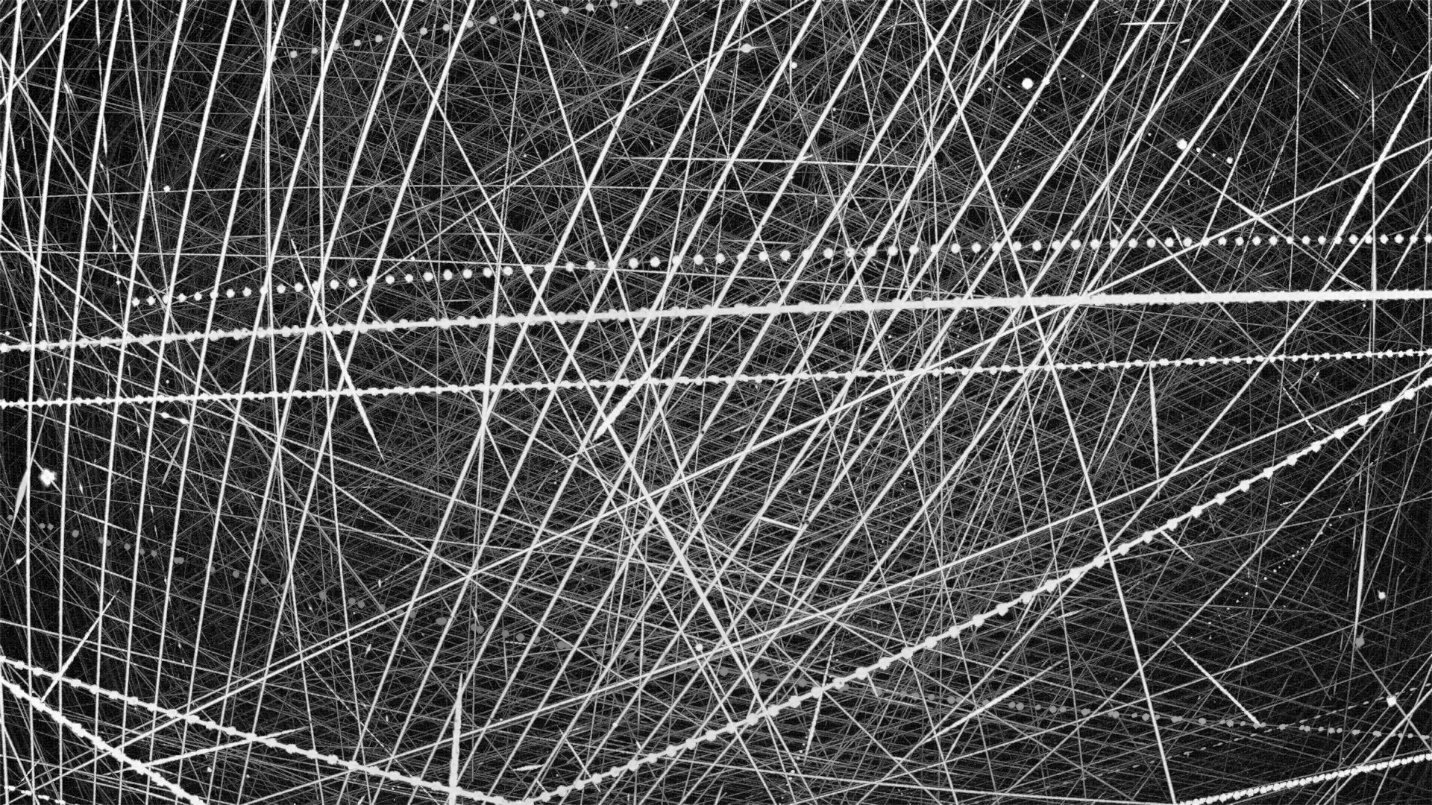
Help characterise the LEO object population and develop uncued-tracking and lightcurve analysis for Luciole.
Key publications
- Vida, D., Mazur, M.J., Brown, P.G., Metchev, S., Clark, D.L., Do, T., Zhang, K.H., Scott, L. 2024. Project Luciole: a wide-field, high-cadence uncued optical system for tracking decimeter-sized LEO objects. AMOS 2024.