CMOR — Canadian Meteor Orbit Radar
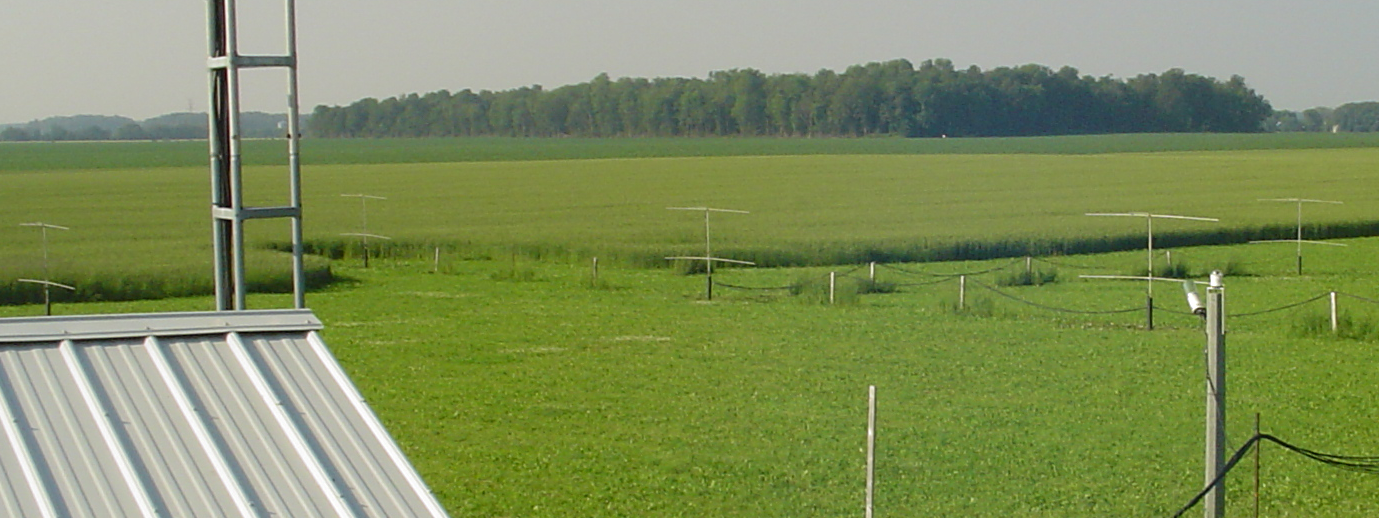
CMOR is a specular meteor radar operating simultaneously at three frequencies: 17.45, 29.85, and 38.15 MHz. The facility sits on a farm near Tavistock, Ontario, surrounded by flat agricultural land that provides a clean radar horizon. Single-station operations began in 1999; multi-station orbit-capable operations started in 2002 with the addition of remote forward-scatter receivers. Three further remote sites with rubidium-clock timing were added in 2009, improving orbit precision significantly.
When a meteoroid ablates in the upper atmosphere, it forms a column of free electrons — the meteor train. CMOR transmits radio pulses; when the train is perpendicular to the line of sight from a receiver, specular reflection produces a strong, characteristic Fresnel-diffraction echo. Interferometry across the five-element antenna array at the central site determines the sky direction of the echo, and the time-delay between central and outlying stations gives the three-dimensional position and speed needed to compute a heliocentric orbit.
At limiting radar mass of roughly 10−7 kg (corresponding to a meteoroid diameter of a few hundred micrometres), CMOR detects about 2,000–5,000 meteors per day, totalling over 25 million orbits and more than 150 million single-station echoes since 2002. This enormous dataset enables statistical studies of the sporadic meteoroid complex and seasonal/annual monitoring of meteor shower activity.
Technical Specifications
| Frequencies | 17.45 MHz, 29.85 MHz, 38.15 MHz (simultaneous) |
| Transmitter power | 6 kW (12 kW on 29.85 MHz) |
| Antenna configuration | All-sky transmitter beam; 5-element receiving array (central site) + 5 forward-scatter receivers |
| Timing | Rubidium oscillators on all remote sites (since 2009) |
| Limiting meteoroid mass | ~10−7 kg (diameter ~0.3 mm) |
| Daily meteor count | ~2,000–5,000 orbits/day (variable with season) |
| Total orbits (2024) | >25 million multi-station; >150 million single-station |
| Operational since | 1999 (single-station), 2002 (orbits) |
| Location | Near Tavistock, Ontario (43.26°N, 80.77°W) |
CAMO — Canadian Automated Meteor Observatory
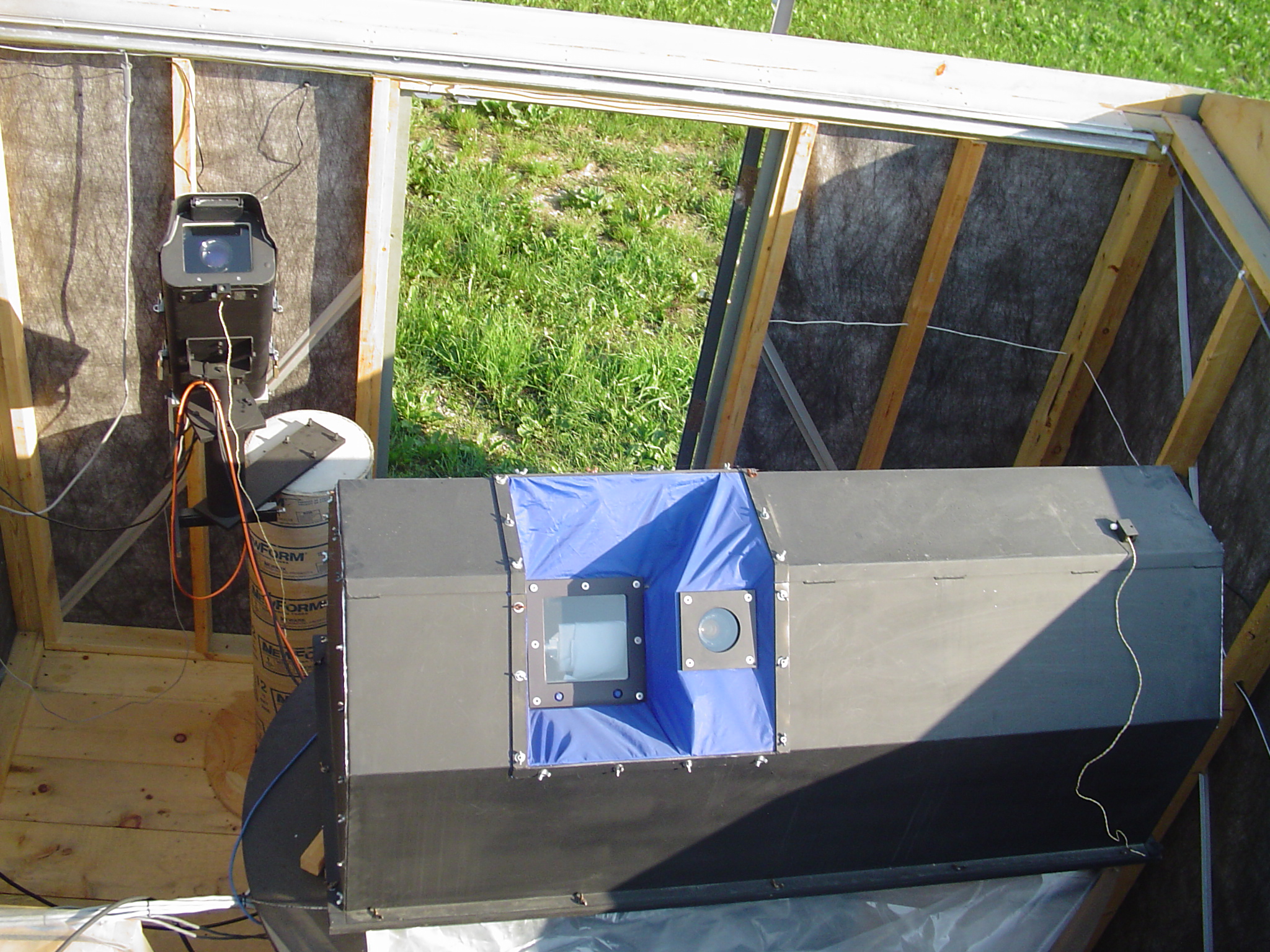
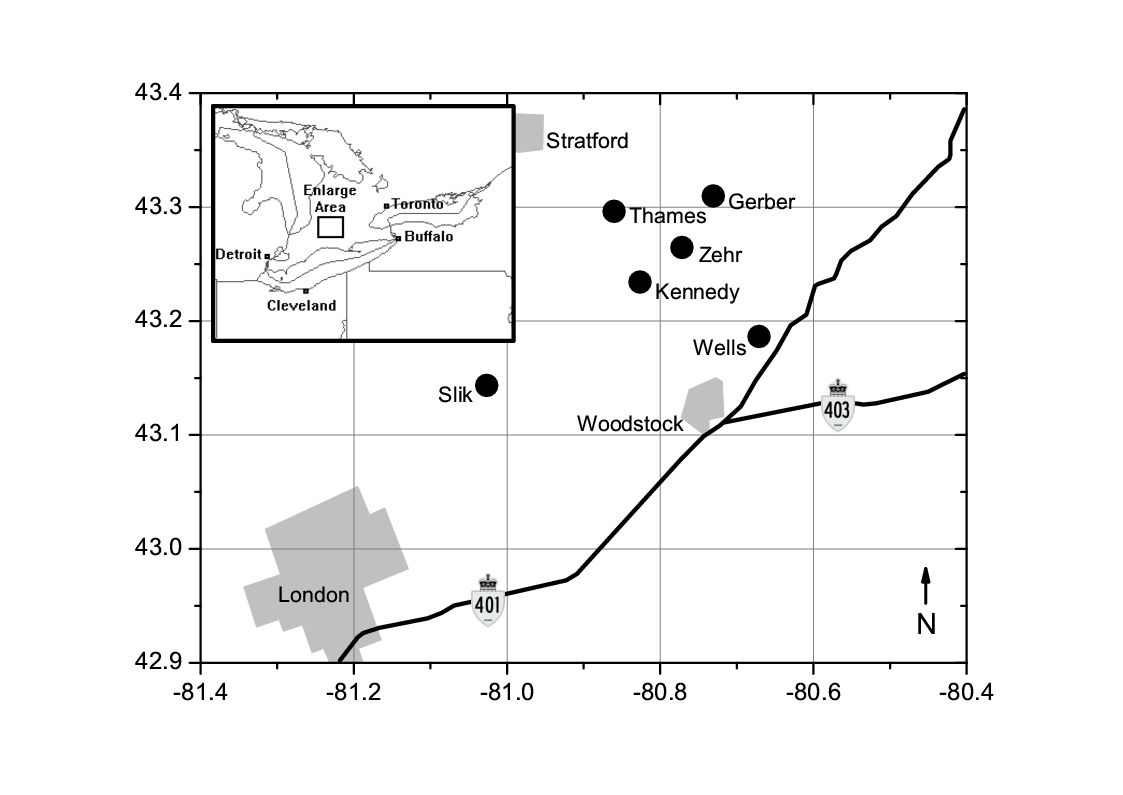
CAMO is an optical meteor observation facility operated at two sites separated by ~45 km: Elginfield Observatory (43.19°N, 81.32°W) and the Tavistock site (43.26°N, 80.77°W, co-located with CMOR). The two-station geometry provides accurate triangulated trajectories.
CAMO consists of three complementary systems, each optimised for different observational goals:
1. EMCCD Cameras
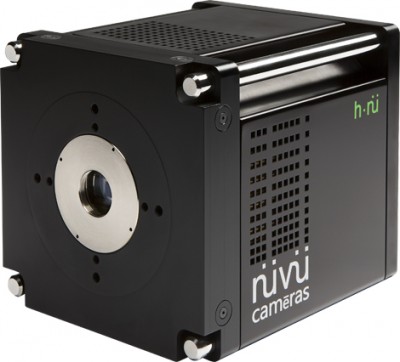
Nuvu HNu1024 electron-multiplied CCDs (1024×1024 pixels, 13 μm pixels, >90% quantum efficiency, up to 5000× EM gain) are paired at each site with a 50 mm f/0.95 lens giving a ~15° field of view. The system runs at 30 frames/s continuously and detects meteors automatically. Since 2017, more than 130,000 double-station EMCCD orbits have been collected, most with limiting magnitude of order +8. Simultaneous EMCCD and CMOR detections (~14,000 events) form the basis of our radar bias-correction programme.
2. Tracking Mirror System
Within 0.1 s of a meteor being detected by the wide-field camera, a pair of driven mirrors slews (at up to 1000°/s) to keep the meteor centred in a 1.5°×1.2° narrow-field camera running at 80–120 fps. The narrow field is formed by a Gen III image intensifier coupled to a 640×480 CCD, reaching a limiting magnitude of +4–+5. At the 100–120 km range of most meteors, this corresponds to a ground-projected resolution of roughly 3 metres — sufficient to resolve individual fragments and measure their transverse separation as a function of time. The tracking system has been collecting data since 2010.
3. CAMO-S Spectral System
A second tracking mirror pair sends a ~8° field onto a slitless spectrograph (diffraction grating + EMCCD camera), recording spectra of meteors to magnitude +3 at 20 fps. Unlike most spectral meteor instruments, the tracking design means the spectrograph follows the meteor across the sky, accumulating more photons per event and enabling spatially-resolved spectroscopy along the trail. Prominent emission lines (Na I 589 nm, Mg I 518 nm, Fe I multiplets, Ca II 393/396 nm, O I 777 nm atmospheric) are detectable.
CAMO System Summary
| EMCCD cameras | 4 cameras (2 pairs), Nuvu HNu1024, 1k×1k, 13 µm pixels, >90% QE, 30 fps, ~15° FOV, lim. mag +8 |
| Tracking wide field | Gen III intensified CCD, 26×19°, 640×480, 80 fps, lim. mag +5 |
| Tracking narrow field | Gen III intensified CCD, 1.5×1.2°, 640×480, 110 fps, lim. mag +4; mirror slew rate 2000°/s |
| CAMO-S spectrograph | EMCCD + diffraction grating, ~8° FOV, 20 fps, lim. mag +3, slitless |
| Station separation | ~45 km (Elginfield – Tavistock baseline) |
| EMCCD orbits (2024) | >130,000 dual-station |
| Operational since | 2010 (mirror system); 2017 (EMCCD) |