Margaret Campbell-Brown
Meteor Physics Group
Department of Physics and Astronomy · Western University, London, Canada
Characterizing the meteoroid environment through radar and optical observations

Department of Physics and Astronomy · Western University, London, Canada
Characterizing the meteoroid environment through radar and optical observations
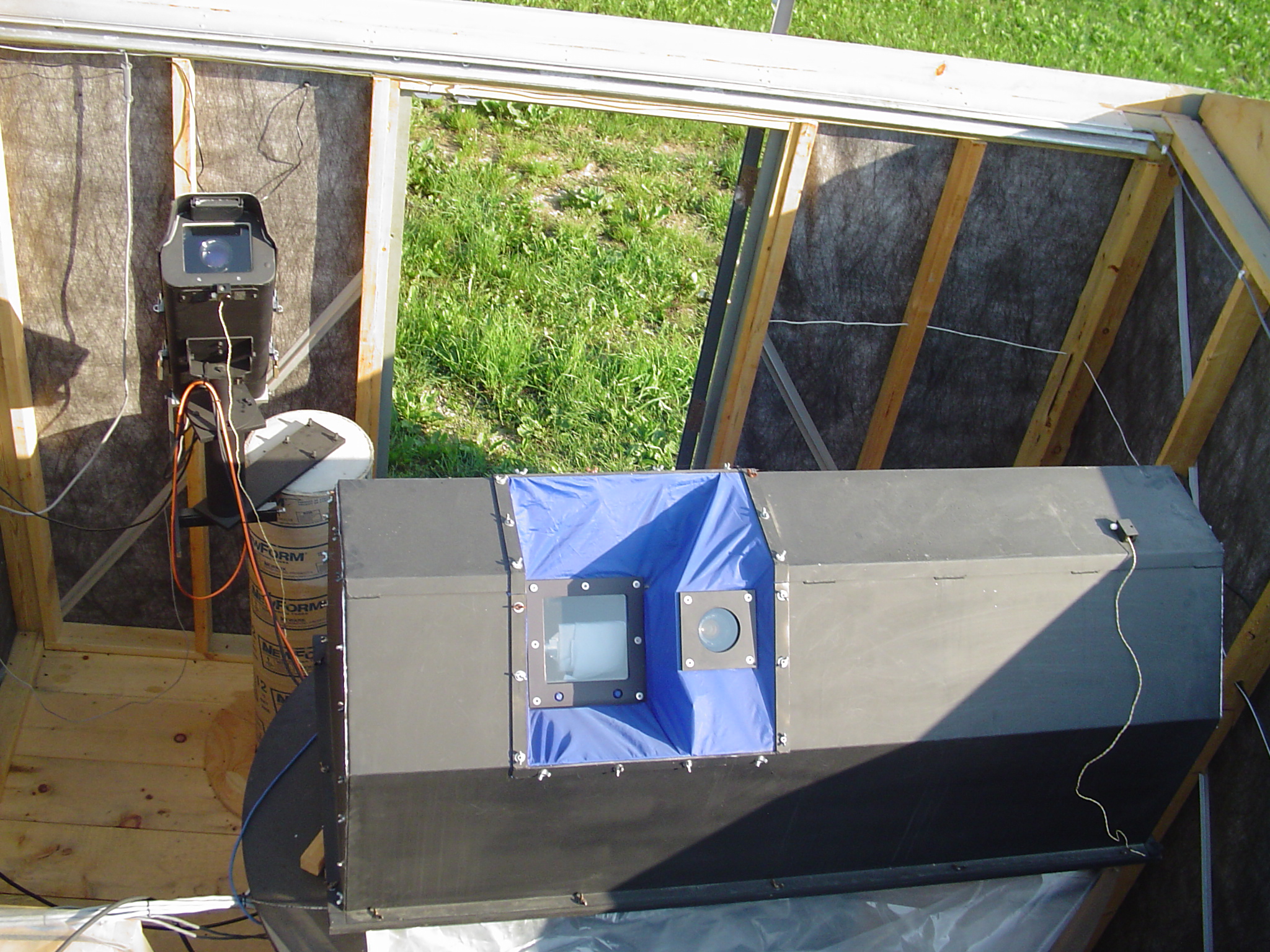
The Meteor Physics Group at Western University studies small particles in the solar system — the millimetre- to centimetre-sized meteoroids that produce meteors as they ablate in the Earth's upper atmosphere. We use the Canadian Meteor Orbit Radar (CMOR) and the Canadian Automated Meteor Observatory (CAMO) to observe meteors with unprecedented sensitivity and resolution.
Our research spans characterization of the sporadic meteoroid complex and meteor showers, meteoroid physical properties, and spectroscopic composition. We combine radio transverse-scatter radar with high-resolution EMCCD optical cameras and tracking mirror systems to characterize individual meteoroids in detail.
Both facilities are located near Tavistock, Ontario, and have been collecting data continuously since 1999 (CMOR) and 2010 (CAMO).
We investigate many aspects of meteoroid physics, from the large-scale structure of the sporadic meteoroid complex to the ablation physics of individual dust particles.
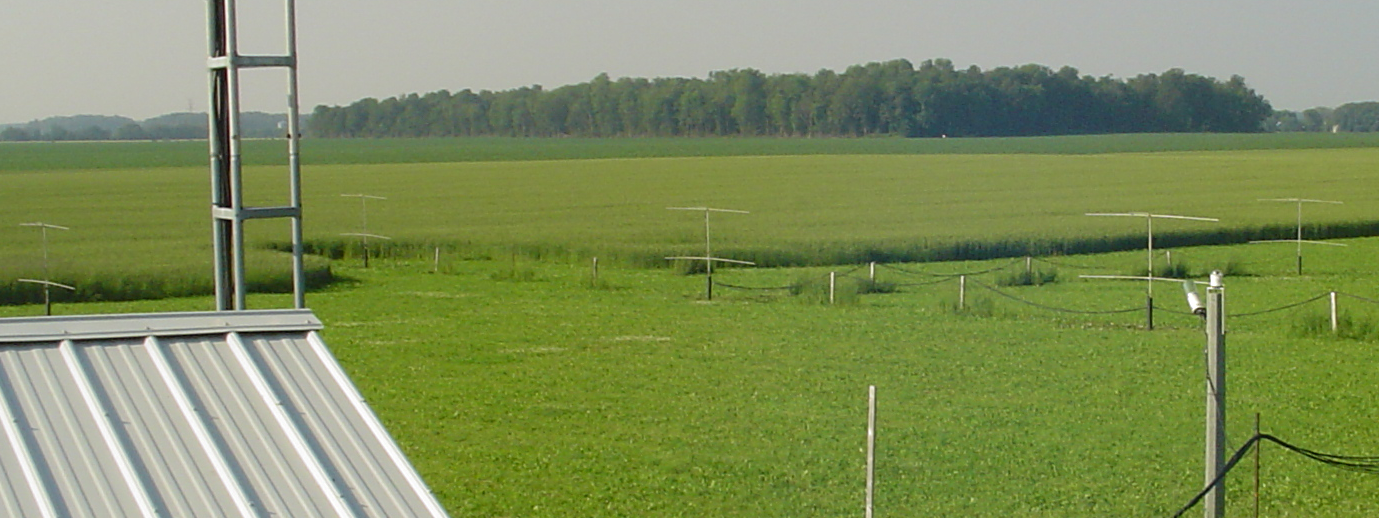
CMOR detects over one million meteor echoes per year at three frequencies (17.45, 29.85, and 38.15 MHz), providing orbits and flux measurements for both shower and sporadic meteors.
Learn more →
CAMO's EMCCD cameras and high-speed tracking mirror system observe meteors to limiting magnitude +10 and +5 respectively, revealing metre-scale structure in individual meteor trains.
Learn more →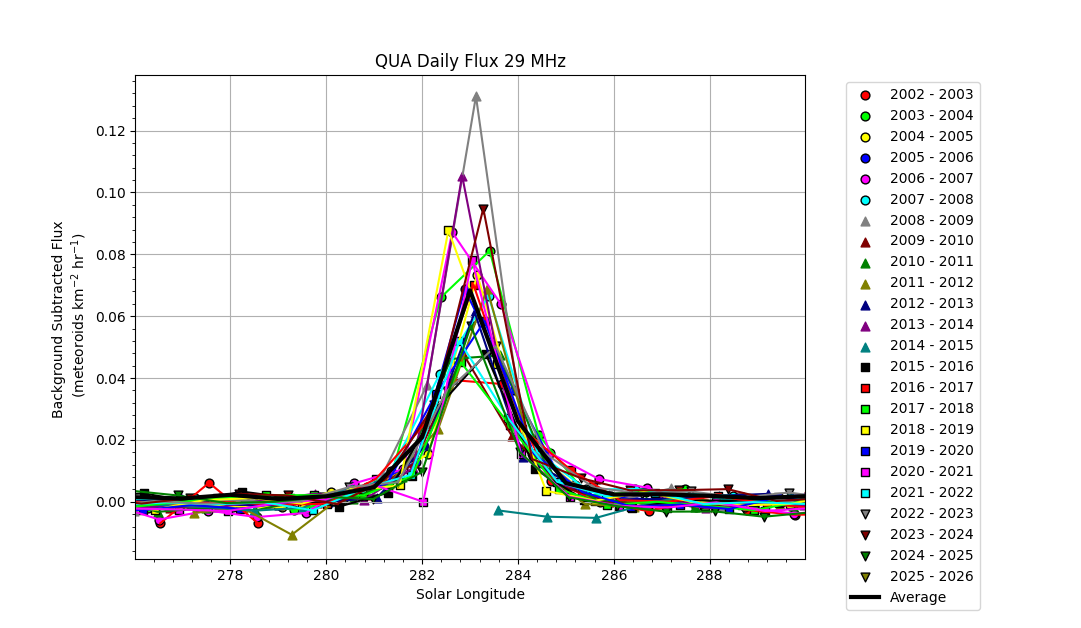
We measure absolute fluxes for annual and outburst meteor showers, and develop corrections for the systematic biases that affect specular radar detection efficiency at different meteor speeds.
Learn more →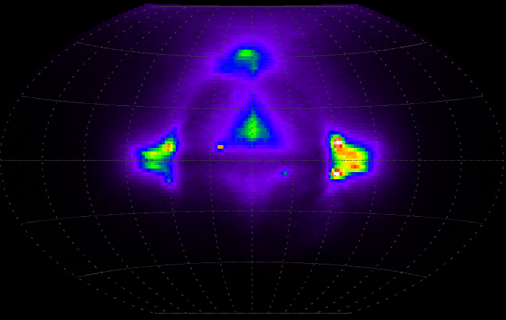
The sporadic meteoroid complex is characterized by six broad sources — helion, antihelion, north and south apex, and north and south toroidal — five of whose relative fluxes and orbital properties are continuously monitored with CMOR.
Learn more →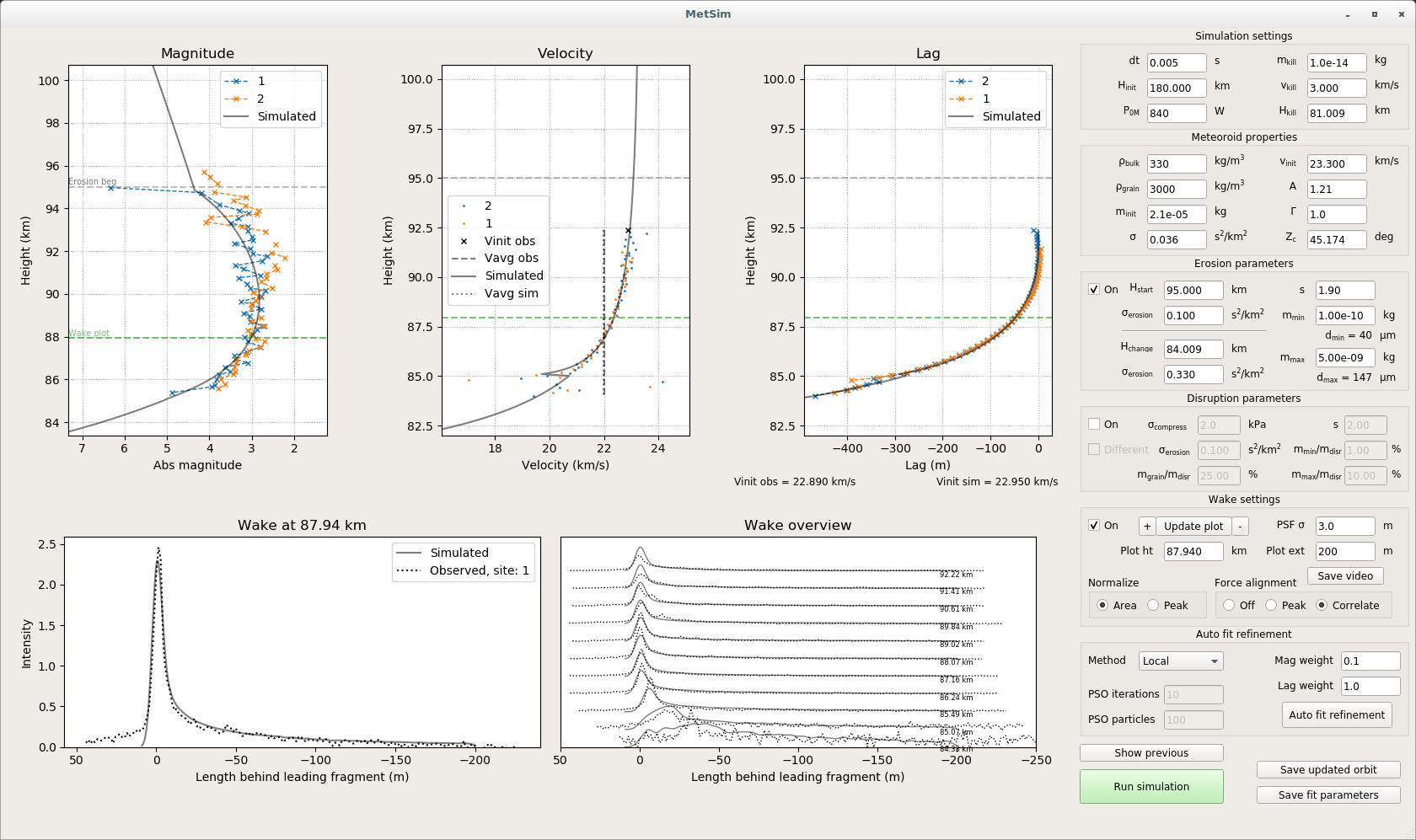
High-resolution optical observations reveal fragmentation, deceleration, and wake structure. We model ablation to constrain meteoroid densities, strengths, and grain sizes, connecting them to parent comets and asteroids.
Learn more →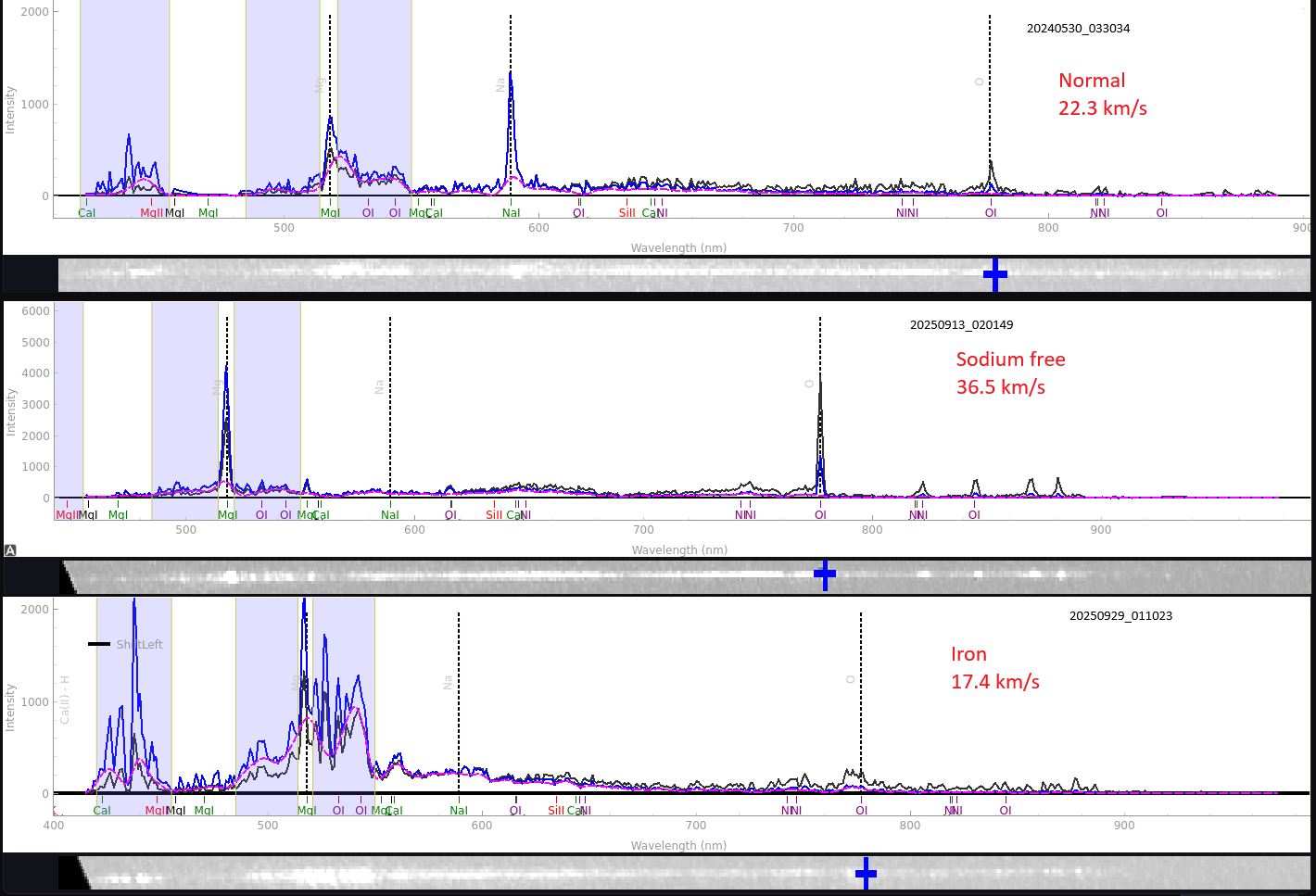
The CAMO spectral system (CAMO-S) records slitless spectra of meteors to magnitude +3. Spectral analysis reveals elemental composition and enables direct determination of luminous efficiency.
Learn more →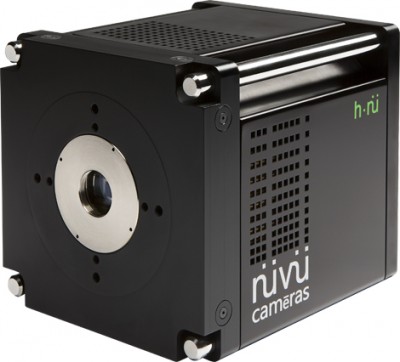
CAMO's EMCCD cameras reveal a population of slow, low-altitude meteors with asteroidal orbits — likely iron-rich meteoroids with early-peaked light curves inconsistent with the standard ablation model.
Learn more →Both observatories are located near Tavistock, Ontario — roughly 50 km west of London — providing a low-light-pollution site with excellent sky coverage.
A specular backscatter radar operating simultaneously at 17.45, 29.85 and 38.15 MHz, with a central site and five outlying receivers at 29 MHz. Since 2002 CMOR has accumulated more than 25 million meteor orbits — the largest single-site meteor orbit dataset in the world. The multi-frequency design allows direct determination of initial-radius and fragmentation corrections by comparing echo detection rates across frequencies.
An optical facility with three complementary systems at two sites (Elginfield and Tavistock): EMCCD cameras (limiting magnitude +10), a high-speed tracking mirror system (limiting magnitude +5, slew rate 1000°/s) that locks onto meteors within 0.1 s of detection, and CAMO-S, a slitless spectrograph with an 8° field of view.